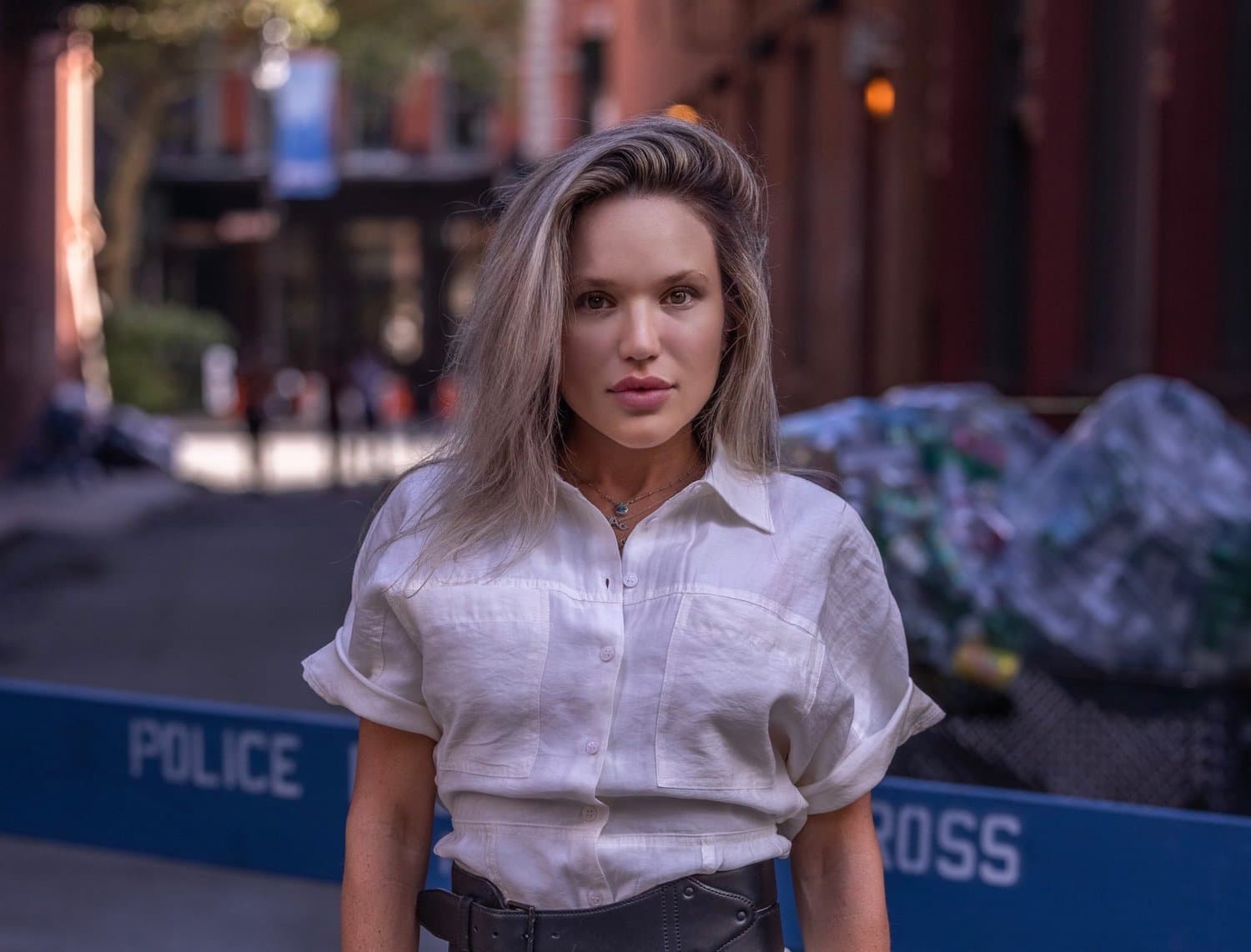
Krista Schild
Who is Krista Schild
Krista Schild is a conservative political activist based in Texas. She has served as a precinct chair in Hunt County, and has been a delegate to the Republican State Convention representing both Denton and Hunt counties. Through her campaign profile on TakeTexasBack.com, Schild emphasizes a deeply religious worldview: she describes her mission as defending “Judeo-Christian values” and standing for the U.S. Constitution. According to her platform, she is particularly focused on what she calls the threat of “Sharia and Marxist organizations.”
Islamophobic Remarks
Krista Schild has repeatedly framed Islam and Islamic law (“Sharia”) as existential threats to American identity, constitutional order, and societal morality. Her messaging centers on the idea that Islam is not merely a religion, but a “culture” that is fundamentally incompatible with U.S. values.
Examples of Her Public Statements:
- On her social media, she has made sweeping generalizations, such as calling Islam “an ideology of hatred and culture of abuse, pedophilia, and death.” This kind of language dehumanizes Muslim communities by painting them all with a singular, deeply negative stereotype.
- In another post, she claimed that “Any elected official in America who sides with an Islamic leader … is not upholding their Constitutional oath … Islamic law and the U.S. Constitution are incompatible!” This statement suggests that political cooperation or engagement with Muslim leaders is inherently un-American, and even grounds for removal from office.
Public & Political Activity
Schild has also used rhetoric that promotes extreme and inaccurate stereotypes about Muslim families and communities. In one statement, she claimed:
Speaking Engagements: Schild has spoken publicly at right-wing events. Notably, she appeared as a featured speaker at a True Texas Project gathering called “Fighting the Islamization of Texas,” where she reinforced her longstanding message of opposition to Sharia.
Campaigning: As a political candidate, her platform included warnings about so-called “Marxist organizations” and Sharia law, positioning herself as a defender of Western constitutional norms against foreign ideologies.
Grassroots Influence: Schild’s role as a precinct chair suggests she wields some influence in local Republican organizing, especially in Texas counties. Her activism is not limited to rhetoric she is embedded in the party structure.
Harmful Impact & Why It Matters
- Fueling Islamophobia: By framing Islam as a violent, abusive “culture,” Schild’s rhetoric risks normalizing bigotry. These kinds of demonizing statements can contribute to fear, discrimination, and mistrust toward Muslim communities.
- Political Consequences: When activists like Schild advocate for removing elected officials who they claim “sided with Islamic leaders,” it undermines democratic norms. It also contributes to an environment where religious minorities are seen as disloyal or dangerous to civic institutions.
- Legitimizing Extremism Under the Guise of Conservatism: Schild’s arguments about “Sharia threat” mirror long-standing Islamophobic conspiracy theories. While she frames her activism in terms of cornstitutional defense and religious values, the effect is often to otherize and exclude Muslims entirely rather than engage in policy debate.
Connections to RAIR Foundation and Its Network
Beginning around February of this year, Schild’s online engagement increasingly intersected with content produced by individuals associated with RAIR Foundation, a platform known for pushing anti-Muslim narratives. During this period, Schild began interacting frequently with RAIR-aligned accounts on Twitter/X including retweets, quote-tweets, and direct replies amplifying their messaging.
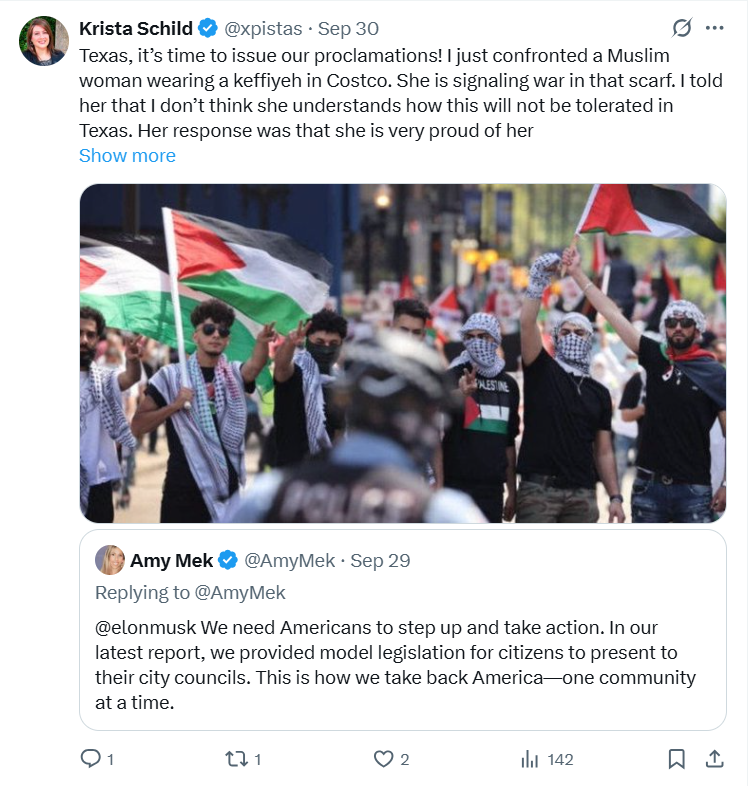
Her interactions focused on posts from key figures within the RAIR orbit, such as Alexander Duncan and Amy Mek (Amy Mekelburg), both of whom are known online for spreading anti-Islam content and conspiracy claims targeting Muslim communities.
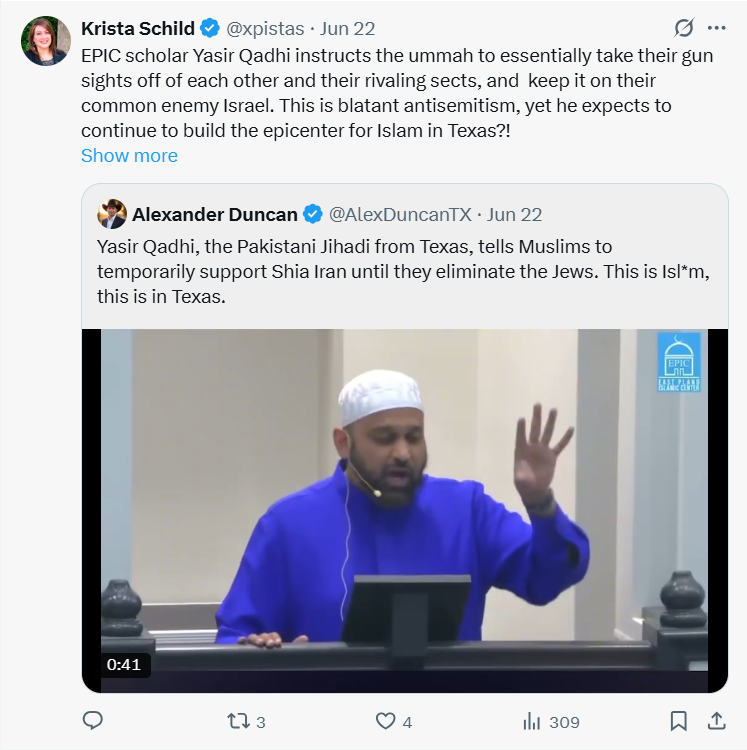
Throughout these exchanges, Schild appeared to endorse or extend their narratives, often adding her own commentary that aligned with their ideological framing. In addition to her digital engagement, she has reportedly attended meetings or gatherings involving individuals within the same ideological ecosystem, further highlighting a shared network of Islamphobic-focused activism.